In our practice, Chester Dental Care , we see how dental needs naturally evolve as patients enter their 40s. Increased sensitivity, higher risks of gum disease, dry mouth, and aging dental work become more common as years of wear and overall health changes begin to affect the mouth. That is why general dentistry in Chester is central to our approach to care. We focus on prevention, early detection, and personalized treatment strategies that help patients protect their natural teeth, maintain long-term oral health, and preserve confident, healthy smiles as they age.
Key Takeaways
-
Your risk for gum disease rises sharply after 40. More than 42% of adults over 30 already have some form of periodontitis, and the rate keeps climbing with age.
-
Dry mouth becomes more common as you age, often from medications, and it raises your cavity risk even if your hygiene hasn't changed.
-
Worn enamel, tooth sensitivity, and root exposure are normal signs of decades of use, but they are treatable, not inevitable.
-
Routine dental care every six months is the single most effective way to catch problems before they become expensive.
-
Restorative and cosmetic dentistry options like crowns, veneers, and tooth-colored fillings are more accessible than ever and can protect aging teeth while keeping your smile looking its best.
Why Your Teeth Feel Different After 40
By your 40s, your teeth have been working hard for decades. That wear shows up in ways that are real, measurable, and worth paying attention to.
You brush. You floss. You try to do the right things. But somewhere around your 40s, you might notice your teeth feel more sensitive. Your gums may bleed a little more easily. A tooth that's been fine for years suddenly needs a crown.
This isn't a failure of your routine. It's biology. Your mouth changes as you get older, and the care that worked in your 20s and 30s needs to evolve, too.
If you live in Chester or Richmond, VA, and have been putting off a dental visit, this is the information you need to
read first.
What Happens to Your Teeth After 40?
After 40, your teeth face a combination of accumulated wear, hormonal shifts, and new health factors that weren't there before.
Here's what's actually changing inside your mouth:
Enamel thins and wears down. Your molars alone can handle over 200 pounds of force per bite. Over decades, that wears down the outer layer of enamel. Flattened biting edges and increased sensitivity are signs that this is happening.
Gums begin to recede. Gum tissue naturally pulls back a little with age. This exposes the root surface of the tooth, which isn't protected by enamel. Root surfaces are softer and more prone to decay and sensitivity.
Saliva production decreases. Saliva is your mouth's built-in defense system. It washes away bacteria, neutralizes acid, and remineralizes enamel. When saliva output drops, often because of medications, cavities become more likely, even with good brushing habits.
Existing dental work ages, too. Fillings, crowns, and bonding don't last forever. Old silver amalgam fillings can crack teeth from the inside as they expand and contract with temperature changes. After 10 to 20 years, they often need attention.
Jawbone density begins to decline. Bone loss in the jaw can loosen teeth and affect the fit of any dental work you've
had. This connects closely to your overall bone health.
How Common Is Gum Disease After 40?
Very common, and most people don't know they have it.
Nearly half (42%) of all adults aged 30 years and older have some form of periodontitis . Severe periodontitis affects about 8% of adults.
Periodontitis is a gum disease that goes beyond inflamed gums. It involves actual bone loss around the teeth. The tricky part is that it rarely hurts in the early stages. You might notice bleeding when you brush, or a little puffiness in your gums, but nothing that feels like a serious problem.
By the time most people seek treatment, the disease has been active for months or years.
The connection between gum disease and your overall health matters here, too. Research links untreated periodontitis
to a higher risk of heart disease, diabetes complications, and other systemic conditions. Taking care of your gums
isn't just a dental issue.
How Your Dental Needs Change By Decade
The table below shows how dental priorities shift as you age, and what your general dentistry care should focus on at each stage.
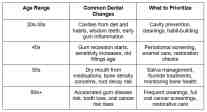
The earlier in this progression you work with a general dentistry clinic that understands these changes, the more of your natural teeth you keep.
Does Dry Mouth Really Cause Cavities?
Yes. Dry mouth is one of the most underestimated cavity risks for adults over 40.
Saliva does far more than keep your mouth comfortable. It neutralizes the acids that bacteria produce after you eat. It washes food particles off your teeth. It delivers minerals that help repair early damage to enamel.
When saliva production drops, all of that protection drops with it. Bacteria thrive. Acid lingers. Cavities form in places you didn't expect - along the gumline, on root surfaces, and even under old crowns.
The most common reason for dry mouth in adults over 40? Medications. Blood pressure medications, antidepressants, antihistamines, diuretics, and dozens of others list dry mouth as a side effect. If you take any of these, your cavity risk goes up even if your diet and brushing haven't changed.
Talking to your dentist about this is the right move. There are prescription-strength fluoride options and saliva
substitutes that can help.
What General Dentistry Services Matter Most After 40?
Routine dental care is the foundation. What it includes should evolve as you age.
A general dentistry visit after 40 isn't the same as one in your 20s. Here's what a good general family dentistry practice should be checking at each visit:
Periodontal probing. Your hygienist measures the depth of the pockets between your gums and teeth. Numbers of 1–3mm are healthy. Anything 4mm or above signals the start of a problem.
Oral cancer screening. The risk of oral cancer increases with age, particularly after 40. A thorough screening takes just a few minutes and can catch changes early, when treatment is most effective.
X-rays that show bone levels. Standard bitewing X-rays catch cavities. Periodontal bone loss needs a different view. Ask if your dentist is checking your bone levels periodically.
Assessment of existing dental work. Your provider should check for cracks in old fillings, failing margins on crowns, and any areas where bacteria are getting in under old restorations.
Bite evaluation. Grinding and clenching (bruxism) become more damaging over time as enamel thins. A bite guard or
splint can prevent further wear.
What About Restorative and Cosmetic Dentistry After 40?
Restorative and cosmetic dentistry after 40 isn't about vanity. It's about protecting what you have while keeping your smile functional and healthy.
The average adult between the ages of 20 and 64 has three or more decayed or missing teeth.That number tends to grow without consistent care and timely treatment.
The good news is that advanced dentistry options have come a long way. What's available now is more durable, more natural-looking, and more effective than what existed 20 years ago.
Tooth-colored composite fillings. These bond directly to your tooth structure, support the tooth rather than creating internal pressure, and look completely natural. Replacing old silver amalgam fillings with composites can protect cracked or weakened back teeth.
Porcelain crowns. When a tooth has a large old filling, a crack, or significant decay, a crown covers and protects the entire tooth. Modern crowns are matched to your natural tooth color and shaped to fit your bite properly.
Dental veneers. If worn-down or discolored teeth are affecting how you feel about your smile, veneers are thin porcelain shells bonded to the front surface of teeth. They don't change the tooth's function; they restore its appearance.
Dental implants. They are widely considered the gold standard for replacing missing teeth. An implant replaces both the root and the crown, preserving the jawbone and preventing neighboring teeth from shifting.
At
Chester Dental Care
in Chester, VA, we offer
general dentistry services
that include both preventive and restorative care under one roof. You don't have to go to multiple offices to manage
complex dental needs.
How Often Should You See a Dentist After 40?
Twice a year is the standard for most adults. After 40, some people benefit from visits every three to four months.
If you have a history of gum disease, active bone loss, or high cavity risk from dry mouth, more frequent visits aren't overkill. They're the difference between keeping your teeth and losing them.
At each visit, your hygienist removes tartar buildup that brushing can't reach. That buildup is the direct driver of gum disease. The more consistently it's removed, the less chance the disease has to advance.
Think of it this way: waiting a full year between cleanings when you have active gum disease is like ignoring a slow
leak in your roof for 12 months. The damage that accumulates is much harder to fix than if you had caught it at six
months.
How Do You Choose the Right General Dentistry Clinic After 40?
Look for a practice that treats the whole picture, not just individual teeth.
Your dental provider should know your health history, understand how your medications affect your mouth, and take the time to explain what they're seeing at each visit. You shouldn't leave a dental visit confused about your own mouth.
At Chester Dental Care , our team has nearly two decades of dental experience. We prioritize patient education and early intervention. We see patients from Chester, Richmond, Chesterfield, Midlothian, Hopewell, and surrounding communities throughout Virginia.
Our clinic provides general family dentistry services , and we believe your dentist should make your health better, not just your teeth cleaner.
Take Control of Your Dental Health After 40
The dental changes that come with age are real. So are the solutions.
If you're over 40 and haven't had a dental exam recently, or if you've noticed sensitivity, bleeding gums, or changes in your bite, now is the right time to come in.
Call Chester Dental Care at (804)748-2555 to schedule your next visit. You can also reach us by email at frontdesk@chesterdentalcareva.com . We serve Chester, Richmond, Chesterfield, Midlothian, Hopewell, and nearby areas in Virginia. Whether you need a routine cleaning or a full restorative and cosmetic dentistry evaluation, we'll give you a clear picture of where your oral health stands and what it takes to keep it strong.
Recent Posts

General Dentistry vs. Airway-Centered Care: Why Chester Dental Care Offers Both
Shwetha Rodrigues | October 7, 2026
Dental Implants vs. Bridges vs. Dentures: Comparing Your Tooth Replacement Options
Shwetha Rodrigues | September 15, 2026
Do I Need a Pediatric Dentist, or Can My Child See My General Dentist?
Shwetha Rodrigues | July 30, 2026Breathe Right.
Sleep Tight.
Smile Bright.
Request Your Appointment