Do you wince when you drink cold water? Does brushing your teeth make you uncomfortable? You're not alone. One in eight Americans deals with sensitive teeth, making everyday activities like eating and drinking a challenge. The good news is that gentle methods for cleaning teeth can help manage this common problem while minimizing discomfort.
At Chester Dental Care, we assist patients with teeth cleaning services that cater to sensitive teeth without causing discomfort. We take the time to understand your symptoms, tailor our cleaning techniques, and use methods specifically designed to minimize irritation. Our goal is to maintain your oral health while making sure that every visit is as comfortable as possible.
Key Takeaways
1. Sensitive teeth affect millions of Americans. One in eight people experience tooth sensitivity, often caused by worn enamel, gum recession, or teeth grinding. Understanding the cause helps you find the right solution.
2. Regular professional teeth cleaning appointments prevent sensitivity from worsening. Skipping dental visits allows plaque buildup that leads to gum disease and more sensitivity. Routine cleanings every six months help protect your enamel and catch problems early.
3. Gentle techniques make dental cleanings comfortable. Modern dental offices use ultrasonic scalers, desensitizing agents, warm water, and topical numbing gel to reduce discomfort during cleanings. Always tell your hygienist about your sensitivity so they can adjust their approach.
4. The average teeth cleaning cost is affordable and worth the investment. Routine cleanings typically cost $100-$200 without insurance, but most insurance plans cover preventive care at 100%. When searching for teeth cleaning nearby, look for offices that specialize in gentle care for sensitive teeth.
5. At-home care between dental visits is essential. Use soft-bristled brushes, sensitivity toothpaste, and gentle circular motions when brushing. Avoid acidic foods when possible, and consider a night guard if you grind your teeth. These simple steps help manage sensitivity day-to-day.

Understanding Tooth Sensitivity
Tooth sensitivity happens when the protective layer of your teeth wears away. This exposes the softer part underneath called dentin. When hot, cold, sweet, or acidic foods touch this exposed area, you feel a sharp pain.
According to research published by the National Institutes of Health, about 12% of adults experience dentin hypersensitivity during routine dental visits. That number is even higher among people with gum recession, where nearly 17% report sensitivity issues.
Several things can cause sensitive teeth:
-
Worn enamel from brushing too hard or using a hard-bristled toothbrush damages the protective coating on your teeth over time.
-
Gum recession exposes the tooth roots, which don't have the same strong enamel protection as the rest of your teeth.
-
Teeth grinding wears down enamel and can crack teeth, creating pathways for sensitivity.
-
Acidic foods and drinks like soda, citrus fruits, and wine can slowly dissolve enamel, making teeth more sensitive.
-
Whitening products can temporarily increase sensitivity by opening up tiny channels in your teeth.
Many patients also experience sensitivity after dental procedures such as fillings or crown placements, though this usually improves within a few weeks. Tooth decay can also expose the inner layers of a tooth, triggering sharp or lingering discomfort. In some cases, sinus pressure or infections can mimic tooth sensitivity, making the pain feel worse when you bend down or chew.
Why Regular Teeth Cleaning Matters
Many people with sensitive teeth avoid going to the dentist because they worry about discomfort. However, skipping professional teeth cleaning actually makes the problem worse. When plaque builds up on your teeth, it can lead to gum disease, which causes more gum recession and increases sensitivity.
Regular dental cleanings remove plaque and tartar that you can't clean away at home. This helps prevent cavities, gum disease, and further damage to your enamel. Most dentists recommend getting your teeth cleaned every six months.
Gentle Cleaning Techniques at the Dentist
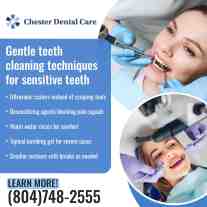
Modern dental offices like Chester Dental Care understand that sensitive teeth need special care. Here are some gentle techniques that make teeth cleaning more comfortable:
-
Ultrasonic scalers use gentle vibrations instead of scraping to remove tartar. These tools are often more comfortable than traditional metal scalers.
-
Desensitizing agents can be applied before cleaning to block pain signals from reaching your nerves.
-
Slower, more careful cleaning takes extra time but reduces discomfort. Your hygienist can work in smaller sections and give you breaks.
-
Warm water rinses feel much better than cold water when you already have sensitive teeth.
-
Topical numbing gel can be placed on your gums before cleaning to reduce any discomfort.
-
Fluoride treatments after cleaning help strengthen enamel and reduce sensitivity over time.
Don't be afraid to speak up about your sensitivity. Your dental team can adjust their approach to make your visit as comfortable as possible.
At-Home Care for Sensitive Teeth
Between professional cleanings, you can take steps at home to manage sensitivity:
-
Use a soft-bristled toothbrush and replace it every three months. Hard bristles damage enamel and irritate gums.
-
Switch to toothpaste for sensitive teeth. These products contain ingredients that block pain signals and need about two weeks of regular use to work.
-
Brush gently using circular motions instead of scrubbing back and forth. Think of massaging your teeth rather than scrubbing them.
-
Avoid acidic foods and drinks when possible, or rinse with water after consuming them. Wait at least 30 minutes before brushing after eating acidic foods.
-
Use a fluoride mouthwash to help strengthen enamel. Look for alcohol-free options that won't dry out your mouth.
-
Consider a night guard if you grind your teeth while sleeping. This protects your enamel from damage.
Average Cost of Teeth Cleaning
One concern that keeps people from getting regular cleanings is cost. Understanding what to expect can help you plan ahead and prioritize your oral health.
Type of Cleaning |
Without Insurance |
With Insurance |
Routine Cleaning (Prophylaxis) |
$100 - $200 |
Often $0 - $50 |
Deep Cleaning (Per Quadrant) |
$150 - $300 |
$50 - $150 |
Routine Cleaning + X-rays |
$200 - $350 |
Varies by plan |
The average cost of teeth cleaning in the United States is around $104 to $203, according to recent data. However, this can change based on where you live and what type of cleaning you need. Cities typically charge more than rural areas, and specialized treatments cost more than routine cleanings.
Many dental insurance plans cover preventive care like routine teeth cleaning at 100%, meaning you pay nothing out of pocket for at least two cleanings per year. Even without insurance, the cost is worth it when you consider that preventing problems saves money in the long run.
If you're searching for teeth cleaning nearby, remember that cost shouldn't be the only factor. Look for a dental office that understands sensitive teeth and offers gentle techniques. Chester Dental Care serves the Greater Richmond, Virginia area, including Chester, Chesterfield, Henrico, and Hanover counties.
When to See a Dentist About Sensitivity
While some sensitivity is normal, certain signs mean you should schedule an appointment right away:
-
Pain that lasts more than a few seconds after the trigger is gone
-
Sensitivity that keeps you awake at night
-
Pain when biting down
-
Visible holes or dark spots on your teeth
-
Swollen or bleeding gums
-
Sensitivity that suddenly gets much worse
These symptoms might point to a cavity, cracked tooth, or gum disease that needs treatment. According to industry experts, proper diagnosis is important because sensitivity can have many causes, and each requires different treatment.
The Benefits of Gentle Dental Care
Choosing a dental practice that specializes in gentle care makes a big difference for people with sensitive teeth. At Chester Dental Care, we use modern technology and take extra time to provide comfort during teeth cleaning procedures.
Our team understands that dental anxiety and fear of pain are real concerns. We work with you to find solutions that make your visits as pleasant as possible. This might include:
-
Taking breaks during your cleaning
-
Using the gentlest instruments available
-
Applying desensitizing treatments before we begin
-
Explaining each step so you know what to expect
-
Adjusting the water temperature to your comfort level
Routine dental care shouldn't be something you dread. When you find a dental office that prioritizes your comfort, regular visits become much easier.
Moving Forward with Confidence
Sensitive teeth don't have to control your life or keep you from the dental care you need. Gentle cleaning techniques, both at home and at the dentist's office, can help you maintain good oral health without constant discomfort.
The teeth cleaning cost is a small investment compared to the expense and pain of treating advanced dental problems. Regular cleanings catch issues early, prevent sensitivity from getting worse, and keep your smile healthy for years to come.
If you've been putting off your dental cleaning because of sensitive teeth, now is the time to take action. Call Chester Dental Care at (804) 748-2555 or email frontdesk@chesterdentalcareva.com to discuss your concerns and learn about our gentle cleaning options. We're here to make your dental experience comfortable and positive.
Remember, sensitivity often improves with proper care and treatment. For many patients, it's possible to live without constant tooth pain. With the right approach to cleaning teeth and professional dental care, you can enjoy your favorite foods and drinks within reason.
Your oral health affects your overall well-being. Don't let sensitive teeth keep you from getting the care you deserve. Schedule your appointment today and experience the difference that gentle, patient-focused dental care can make.
Recent Posts

General Dentistry vs. Airway-Centered Care: Why Chester Dental Care Offers Both
Shwetha Rodrigues | October 7, 2026
Dental Implants vs. Bridges vs. Dentures: Comparing Your Tooth Replacement Options
Shwetha Rodrigues | September 15, 2026
Do I Need a Pediatric Dentist, or Can My Child See My General Dentist?
Shwetha Rodrigues | July 30, 2026Breathe Right.
Sleep Tight.
Smile Bright.
Request Your Appointment