A small crack can turn into a big problem fast. A cracked tooth becomes a dental emergency when bacteria enter the crack, infection sets in, or the tooth splits completely. This can happen in days or weeks, not months.
Most people do not rush to the dentist when they crack a tooth. The pain may feel minor. It may come and go. Life gets busy. But what starts as a hairline fracture can spread to the root, damage the nerve, and lead to an abscess or tooth loss.
At Chester Dental Care, serving Chester, VA, and nearby areas including Richmond, Chesterfield, Hopewell, and
Midlothian, we treat cracked teeth before they reach that point.
General dentistry services
exist for exactly this reason - to catch problems early.
Key Takeaways
-
A cracked tooth does not always hurt right away; pain may come and go, making it easy to ignore and easy to put off seeing a dentist.
-
Cracks spread over time; chewing, grinding, and temperature changes push the crack deeper, turning a minor issue into a need for emergency dental care.
-
Infection can follow quickly; bacteria enter through the crack and can reach the root or jaw, which is why finding an emergency dentist early makes a difference.
-
Waiting makes treatment harder and more costly; a simple dental bond today can become a root canal tomorrow; this is something the team at general family dentistry in Chester sees regularly.
-
Pain is not the only warning sign; sensitivity to cold, biting pain, and swollen gums all signal a problem that general dentistry in Chester can catch and treat before it gets worse.
Why Do Teeth Crack in the First Place?
Teeth crack for several common reasons. Most are everyday habits or events that people do not think twice about.
Common causes of cracked teeth include:
-
Biting into hard foods like ice, hard candy, or unpopped popcorn kernels
-
Teeth grinding (bruxism), often during sleep
-
An old, large filling that weakens the surrounding tooth structure
-
A fall or blow to the mouth
-
Sudden temperature changes (drinking hot coffee, then ice water)
-
Age: teeth become more brittle over time
Anyone can crack a tooth. Children crack teeth from falls and sports. Adults crack teeth from stress-related grinding. Older adults crack teeth because enamel wears down over decades.
What Happens Inside a Cracked Tooth?
Think of a cracked tooth like a cracked windshield. A tiny crack looks harmless. But pressure, vibration, and time cause it to spread.
Inside your tooth, there are layers. The outer layer is enamel. Below that is dentin, a softer layer with tiny tubes that connect to the nerve. At the center is the pulp, which holds the nerve and blood vessels.
When a crack reaches the dentin, you feel sensitivity. When it reaches the pulp, you feel real pain. When bacteria travel through the crack into the pulp, infection begins. That infection can spread to the root, the gum, and even the jaw.
According to the
American Association of Endodontists
, problems related to cracked teeth are the third leading cause of tooth loss in adults, after tooth decay and gum
disease.

The earlier a crack is caught, the more options you have. A craze line needs little treatment. A split tooth may need to be removed. That gap between those two outcomes is time, and what you do with it. Seeing an emergency dentist before the crack reaches a point of no return can make all the difference.
Signs Your Cracked Tooth Needs Emergency Dental Care
Some cracks are obvious. You bite into something hard and feel a sharp pain. You hear a pop. You see a piece of tooth on your plate.
Other cracks are sneaky. They hide under old fillings. They sit in spots your tongue cannot reach. They cause symptoms that feel like something else.
Watch for these warning signs:
-
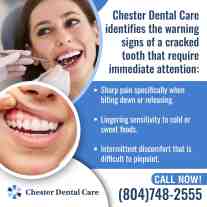
Pain when biting down, but not constant pain: this is a classic crack symptom
-
Sensitivity to cold or sweet foods that lingers after the food or drink is gone
-
Swollen or tender gums around one tooth
-
A feeling that something is wrong, but you cannot pinpoint it
-
Visible line or chip on the tooth surface
Any one of these symptoms means you should call a dentist. Two or more means you should call today. Delaying routine dental care when you have symptoms moves you from a manageable situation to an emergency one.
What Happens If You Ignore a Cracked Tooth?
Ignored cracks do not heal on their own. The tooth cannot repair a fracture the way bone can. Without treatment, the crack grows.
Here is how the situation typically unfolds when someone waits:
-
Week 1-2: A small crack exists. Mild sensitivity when chewing or drinking cold liquids. The crack is still above the gum line. A crown or dental bonding may be all that is needed.
-
Week 3-4: The crack has deepened. The dentin is now involved. Pain is more frequent. A crown is likely needed. Root canal therapy may be on the table.
-
Month 2+: Bacteria have entered the pulp. The tooth may be abscessed. There is swelling, throbbing pain, or a bad taste in the mouth. A root canal is now likely needed, or the tooth may need to be extracted.
Tooth extraction leads to its own set of problems, including bone loss at the extraction site and shifting of neighboring teeth. A dental implant or bridge will eventually be needed to fill the gap, at a much higher cost and treatment time than a simple crown placed weeks earlier.
Endodontically treated teeth that receive delayed restorations have a lower survival rate than those restored early.
When Is a Cracked Tooth a True Dental Emergency?
Call your dentist right away if you experience any of the following:
-
Severe, throbbing pain that does not go away with over-the-counter pain medication
-
Visible swelling in the gum, cheek, or jaw
-
Fever alongside tooth pain: This may indicate a spreading infection
-
A tooth that has broken in half or pieces are missing
-
Pain when opening your mouth wide or pressing on the jaw
These are signs that the situation has moved beyond general dentistry services and into emergency dental care territory. At this stage, treatment cannot wait until next Tuesday.
Chester Dental Care provides emergency dentist services in Chester, VA , and surrounding communities. If you are in Richmond, Hopewell, Midlothian, or Chesterfield, you do not have to wait for a faraway appointment.
How Is a Cracked Tooth Treated?
Treatment depends on how deep the crack is and how far it has spread.
Dental Bonding: For minor surface cracks, a tooth-colored resin is applied and shaped to restore the tooth. This is a quick, single-visit procedure.
Dental Crown: A crown caps the entire tooth, holding the crack together and preventing it from spreading. This is one of the most common treatments for cracked teeth.
Root Canal Therapy: When the crack has reached the pulp and infection has set in, the infected tissue is removed, and the canal is sealed. A crown is typically placed afterward.
Extraction: When a tooth has split below the gum line or the root is fractured, extraction may be the only option. After healing, a dental implant or bridge can replace the missing tooth.
The right treatment depends on your specific situation. A general dentistry clinic with experience in both routine and advanced dentistry can walk you through your options clearly.
How Does Chester Dental Care Handle Cracked Teeth?
Chester Dental Care is a general family dentistry practice in Chester, VA , with nearly two decades of dental experience. The practice uses advanced diagnostic tools to identify cracks that are not visible to the naked eye.
The team here does not guess. They examine, diagnose, and explain your options in plain language. Whether you need a simple bond or something more involved, you get a clear picture of what is happening and what comes next.
The staff at Chester Dental Care has stayed consistent over the years. That matters. When the same team sees you visit after visit, they notice changes. They catch things early. General dentistry in Chester is not just about cleaning teeth; it is about building a relationship with your oral health over time.
The practice also works collaboratively with other medical professionals when needed, which means your care does not stop at the tooth. Your overall health is part of the picture.
Emergency Dental Care: Cracked Tooth FAQs
Can a cracked tooth heal on its own?
No. Teeth cannot regenerate or repair fractures without dental treatment. A crack will not close or shrink. It can only stay the same or get worse. The sooner it is treated, the more tooth structure can be saved.
Does a cracked tooth always hurt?
Not always, especially in the early stages. Some cracks cause no pain at all until they reach the nerve or become infected. This is why regular visits to a general dentistry clinic matter. Dentists can spot cracks you cannot feel yet.
How do I know if my cracked tooth is infected?
Signs of infection include throbbing pain, swelling, fever, a bad taste in the mouth, and sensitivity to pressure. If you have any of these symptoms alongside a cracked tooth, contact an emergency dental care professional the same day.
How long can I wait to see a dentist for a cracked tooth?
If you have pain, do not wait. Even without pain, a cracked tooth should be evaluated within a few days. The longer you wait, the more the crack can spread, and the more complex the treatment becomes.
Take Care of a Cracked Tooth Before It Becomes an Emergency
A cracked tooth is not something to push to the back of your mind. It is one of those situations where acting now saves you time, money, and discomfort later.
Chester Dental Care is here for patients in Chester, Richmond, Chesterfield, Hopewell, Midlothian, and nearby areas across Virginia. Whether you need routine dental care, advanced dentistry services, or emergency dental care, the team is ready to help.
Get Seen Today: Don’t Wait for Pain to Get Worse
If you have a cracked tooth or any dental concern, call us today at (804) 748-2555 to schedule an appointment. We are also reachable via email at frontdesk@chesterdentalcareva.com . We serve patients in Chester, Richmond, Chesterfield, Hopewell, Midlothian, and surrounding areas in Virginia.
Our team at Chester Dental Care brings nearly two decades of experience, consistent staff, and a commitment to whole-health dental care that goes beyond a standard cleaning.
Your tooth will not fix itself. We can help.
Recent Posts

General Dentistry vs. Airway-Centered Care: Why Chester Dental Care Offers Both
Shwetha Rodrigues | October 7, 2026
Dental Implants vs. Bridges vs. Dentures: Comparing Your Tooth Replacement Options
Shwetha Rodrigues | September 15, 2026
Do I Need a Pediatric Dentist, or Can My Child See My General Dentist?
Shwetha Rodrigues | July 30, 2026Breathe Right.
Sleep Tight.
Smile Bright.
Request Your Appointment