Mild obstructive sleep apnea (OSA) occurs when you experience 5 to 15 breathing interruptions per hour during sleep. These pauses happen when your airway becomes partially or completely blocked, disrupting your sleep and reducing oxygen levels in your blood. While classified as mild, this condition still impacts your health and quality of life.
Understanding mild OSA helps you recognize symptoms early and seek appropriate treatment. Many people live with undiagnosed sleep apnea, dismissing snoring as a minor annoyance rather than a health concern. Learning about this condition empowers you to take action before symptoms worsen. At Chester Dental Care, we offer airway-focused snoring treatments that help address the oral and facial factors contributing to disrupted breathing during sleep.
Key Takeaways
-
Mild OSA means your breathing stops or becomes shallow five to fifteen times per hour during sleep, measured by the Apnea-Hypopnea Index.
-
Loud snoring, morning headaches, and daytime fatigue signal possible mild OSA, though many people remain undiagnosed for years.
-
Snoring treatments range from lifestyle changes like weight loss and side sleeping to throat exercises that strengthen airway muscles.
-
Untreated mild OSA increases risks for high blood pressure, heart disease, and stroke by repeatedly lowering oxygen levels throughout the night.
-
Oral appliances, positional therapy, and natural remedies provide effective options for managing mild sleep apnea symptoms.

How Doctors Diagnose Mild OSA
Your doctor uses the Apnea-Hypopnea Index (AHI) to measure sleep apnea severity. This number shows how many times per hour your breathing stops or becomes shallow during sleep. Only a qualified physician can diagnose sleep apnea based on these results. The medical community classifies sleep apnea based on AHI scores.
Mild OSA is diagnosed when your AHI falls between 5 and 15 events per hour. Normal sleep shows an AHI below 5. Moderate OSA ranges from 15 to 30 events per hour, while severe OSA involves more than 30 breathing interruptions hourly.
The diagnostic process typically involves a sleep study. Your physician may recommend an overnight stay at a sleep center where technicians monitor your breathing, heart rate, oxygen levels, and brain activity. Home sleep tests offer a more convenient alternative for people with a high likelihood of OSA and no other serious health conditions.
During the study, sensors track each time your breathing stops for 10 seconds or longer. Complete pauses in airflow are called apneas. Partial reductions in breathing that decrease oxygen levels are called hypopneas. The total number of these events divided by your hours of sleep produces your AHI score.
What Causes Mild OSA
Your airway becomes blocked during sleep when throat muscles relax too much, allowing soft tissues to collapse. Several factors increase your risk of developing this condition.
Excess weight around your neck creates pressure on your airway. The tissue can press down on your throat when you lie down, narrowing the space for air to pass through. Obesity affects up to 70% of people with moderate to severe OSA, though mild cases also occur in people at healthy weights.
Your jaw and facial structure play important roles in airway size. A small or recessed jaw leaves less room for your tongue and throat tissues. A naturally narrow airway makes blockages more likely during the muscle relaxation that occurs in deep sleep.
Aging affects muscle tone throughout your body, including your throat. As you get older, these muscles become less firm and more likely to collapse during sleep. Men experience OSA more frequently than women, though women's risk increases after menopause.
Nasal congestion from allergies, colds, or structural problems forces you to breathe through your mouth. This increases airway resistance and makes obstructions more common. Large tonsils or adenoids, particularly in children, can physically block the airway.
Sleeping on your back allows gravity to pull your tongue and soft palate backward, blocking your throat. This position-dependent sleep apnea improves when you sleep on your side. Avoiding alcohol and sedatives before bed can also help reduce breathing interruptions and support natural treatment for snoring.
Common Symptoms of Mild OSA
Loud, frequent snoring that disturbs your bed partner often signals mild OSA, though not everyone who snores has sleep apnea. Your partner may notice your breathing stops and starts during the night, sometimes followed by gasping or choking sounds as you resume breathing.
You might wake frequently without knowing why, feeling like your sleep is restless and unrefreshing. Morning headaches occur when low oxygen levels during the night cause blood vessels in your brain to dilate. A dry mouth or sore throat upon waking suggests mouth breathing throughout the night.
Daytime fatigue affects your work performance and mood despite spending enough hours in bed. As many as 9 in 10 people with OSA don't know they have the condition, attributing their tiredness to stress or busy schedules rather than disrupted sleep. You might find yourself dozing off while reading, watching television, or sitting in meetings.
Difficulty concentrating and memory problems develop when your brain doesn't get adequate rest and oxygen. Irritability and mood changes strain relationships at home and work. Some people experience decreased interest in activities they once enjoyed.
Not everyone with mild OSA experiences all these symptoms. Some people feel relatively normal during the day but still have breathing interruptions at night. The presence of symptoms, along with your AHI score, helps your doctor determine whether treatment is necessary.
Health Risks of Untreated Mild OSA
Even mild sleep apnea affects your cardiovascular system by repeatedly lowering oxygen levels and disrupting sleep. Each breathing pause triggers a stress response in your body. Your heart rate increases, blood pressure rises, and stress hormones flood your bloodstream.
Over time, these nightly stresses damage blood vessels and strain your heart. People with untreated OSA face higher risks of high blood pressure, irregular heartbeats, heart disease, and stroke. The repeated oxygen drops can lead to changes in how your body regulates blood sugar, increasing diabetes risk.
Sleep fragmentation prevents your body from completing the restorative processes that occur during deep sleep. Your immune system weakens without adequate rest, making you more susceptible to illnesses. Hormone production becomes imbalanced, affecting metabolism and appetite.
The daytime sleepiness from poor sleep quality increases accident risks. Drowsy driving causes thousands of crashes annually. Workplace accidents and injuries occur more frequently when workers cannot maintain alertness and focus.
Treating mild OSA helps prevent related health problems from developing. Early intervention stops the condition from progressing to more severe stages, and exploring effective treatments for snoring can support better sleep and overall health.
Treatments for Snoring and Mild OSA
Multiple treatment options exist for mild OSA, ranging from lifestyle changes to dental devices and medical interventions. Your physician recommends treatments based on your symptoms, overall health, and personal preferences. From a clinical standpoint, dentists do not diagnose or directly treat OSA. Only qualified physicians can diagnose sleep disorders and prescribe or authorize oral appliance therapy.
Lifestyle Modifications
Weight loss provides significant benefits for overweight individuals with mild OSA. Losing even 10% of your body weight can reduce breathing interruptions. Maintaining a healthy weight through diet and regular exercise prevents fat deposits around your neck from compressing your airway.
Sleeping position changes help many people with position-dependent sleep apnea. Side sleeping keeps your airway more open than back sleeping. Special pillows, positional devices, or the simple trick of sewing a tennis ball into the back of your pajamas can prevent rolling onto your back.
Avoiding alcohol for at least four hours before bed prevents excessive muscle relaxation. Quitting smoking reduces inflammation and fluid retention in your throat. Practicing snoring treatment exercises and maintaining a consistent sleep schedule can also serve as effective snoring treatment at home, helping reduce mild OSA symptoms and improve rest.
Snoring Treatment at Home
Keeping your nasal passages clear improves airflow and reduces snoring. Nasal strips physically open your nostrils from the outside. Saline rinses wash away congestion and allergens. Using a humidifier adds moisture to dry air that can irritate throat tissues.
Elevating the head of your bed by four inches or using a wedge pillow reduces gravity's effect on your airway. This simple adjustment helps prevent your tongue from falling backward during sleep.
Snoring Treatment Exercises
Throat and tongue exercises strengthen the muscles around your airway, making them less likely to collapse during sleep. Research shows these myofunctional exercises can reduce mild OSA symptoms when practiced consistently.
Tongue exercises target the muscles that control tongue position. Press your tongue flat against the roof of your mouth and slide it backward. Repeat this movement 20 times. Push the tip of your tongue against your front teeth and slide it backward along your palate several times daily.
Throat strengthening involves pronouncing vowel sounds loudly and clearly. Say each vowel (A, E, I, O, U) while exaggerating the mouth movements. Hold each sound for several seconds. Singing exercises similar muscles and can be an enjoyable way to strengthen your throat.
Cheek exercises involve pushing your finger against your cheek from the outside while resisting with your cheek muscles from the inside. Chewing exercises work your jaw muscles by repeatedly opening your mouth wide and moving your jaw in circular motions.
Consistency matters more than intensity with these exercises. Practice them twice daily for several months to see improvements. While exercises help some people reduce symptoms, they work best as part of a broader treatment approach.
Natural Treatment for Snoring
Essential oils like eucalyptus or peppermint may help open nasal passages when used in a diffuser near your bed. These natural anti-inflammatory agents can reduce congestion that contributes to mouth breathing and snoring.
Staying well-hydrated throughout the day keeps throat tissues moist and less sticky. Dehydration causes secretions in your nose and throat to become thicker, increasing snoring. Drinking water regularly prevents this dryness.
Herbal teas with anti-inflammatory properties, such as chamomile or turmeric tea before bed, may reduce throat inflammation. Some people find that avoiding dairy products in the evening reduces mucus production that can worsen snoring.
Professional Treatment Options
At Chester Dental Care, our dentist in Chester uses custom oral appliances that gently reposition your lower jaw and tongue forward during sleep, helping keep your airway open. These devices, designed for comfort and fit, are often effective for people with mild to moderate OSA who cannot tolerate other treatments.
Treatment options may include:
-
Vivos® airway development appliances to expand and remodel the jaws, improving structure and oxygen flow
-
Myofunctional therapy and guided breathwork to strengthen oral and facial muscles, optimize tongue posture, and reestablish nasal breathing
-
Gentle, non-surgical tightening of soft tissues to reduce snoring and improve tone
-
Collaborative care with sleep physicians, ENTs, chiropractors, and physical therapists to support comprehensive structural and functional recovery.
Mild OSA Severity Comparison
OSA Severity |
Breathing Events Per Hour |
Common Symptoms |
Normal |
Fewer than 5 |
None, occasional snoring |
Mild OSA |
5 to 15 |
Frequent snoring, mild daytime sleepiness, possible morning headaches |
Moderate OSA |
15 to 30 |
Loud snoring, noticeable daytime fatigue, concentration problems |
Severe OSA |
More than 30 |
Very loud snoring, extreme daytime sleepiness, significant health risks |
When to Seek Help for Sleep Apnea
Schedule an appointment with your doctor if you experience loud snoring or excessive daytime sleepiness or have witnessed breathing pauses. Your bed partner's observations about your nighttime breathing provide valuable diagnostic information.
Seek evaluation sooner if you have risk factors like obesity, large neck circumference, high blood pressure, or a family history of sleep apnea. People with certain medical conditions, including heart disease, stroke, or diabetes, should be screened for OSA regardless of symptoms.
Don't wait for symptoms to worsen before seeking help. Early diagnosis and treatment prevent mild OSA from progressing to more serious levels. Treatment also reduces your risk of developing associated health problems.
Living Well With Mild OSA
Chester Dental Care takes an airway-focused approach to sleep and breathing problems. Rather than simply treating symptoms, the practice identifies underlying causes of airway obstruction and works with other healthcare providers to create treatment plans addressing dental structure and breathing patterns.
Dr. Shwetha Rodrigues and her team serve Chester, Richmond, and the surrounding areas in Virginia, including Chesterfield, Henrico, Hanover, and Powhatan counties. With nearly two decades of dental experience and specialized training in airway health, they understand connections between jaw development, airway size, and sleep quality that many dental practices overlook.
The practice offersprofessional dental and snoring treatments addressing both the prevention and management of sleep-related breathing disorders. Early intervention helps children develop proper jaw structure, potentially preventing sleep apnea later in life. For adults experiencing symptoms, customized treatment plans may include dental devices and lifestyle guidance.
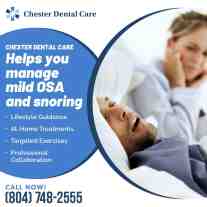
Take Control of Your Sleep Health
Don't let mild OSA rob you of restful sleep and good health. While the condition may seem minor compared to severe sleep apnea, it still affects your daily life and long-term health. Treatment options exist that may dramatically improve your sleep quality and reduce health risks.
The sooner you address breathing problems during sleep, the better your outcomes. Untreated mild OSA tends to worsen over time as aging, weight changes, and other factors progress. Taking action now prevents more serious problems down the road.
Call Chester Dental Care at (804) 748-2555 or email frontdesk@chesterdentalcareva.com to schedule a consultation about sleep and airway health. The knowledgeable team evaluates your symptoms, discusses appropriate diagnostic testing, and explains treatment options suited to your needs. Serving families throughout the Greater Richmond area, Chester Dental Care combines dental knowledge with airway health practices to help you breathe better and sleep soundly.
Recent Posts

General Dentistry vs. Airway-Centered Care: Why Chester Dental Care Offers Both
Shwetha Rodrigues | October 7, 2026
Dental Implants vs. Bridges vs. Dentures: Comparing Your Tooth Replacement Options
Shwetha Rodrigues | September 15, 2026
Do I Need a Pediatric Dentist, or Can My Child See My General Dentist?
Shwetha Rodrigues | July 30, 2026Breathe Right.
Sleep Tight.
Smile Bright.
Request Your Appointment