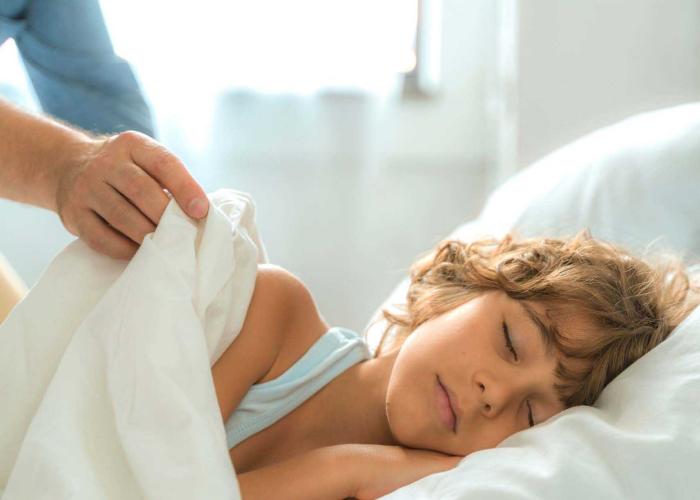
Choosing between an oral appliance and surgery for snoring depends on your specific anatomy, severity level, and tolerance for different treatments. Oral appliances work for mild to moderate cases by repositioning your jaw forward during sleep. Surgery addresses structural problems but comes with higher risks and a longer recovery. Both treatments for snoring have success rates ranging from 40% to 90%, depending on the procedure type. Understanding these options helps you make an informed choice for long-term relief.
Snoring affects your sleep quality and strains relationships. Finding the right snoring treatment at home starts with understanding what causes your snoring. Your airway becomes partially blocked during sleep. Relaxed throat muscles narrow the passage. Air flowing through vibrates the surrounding tissues. This vibration creates the sound you recognize as snoring.
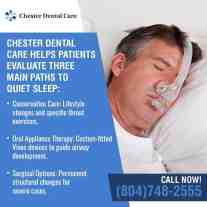
For some people, simple lifestyle changes work well. Others need more targeted snoring treatments like oral appliances. A smaller group requires surgical intervention. Your decision depends on factors like symptom severity, overall health, and personal preferences.
At Chester Dental Care, patients receive individualized evaluation to determine whether lifestyle changes, oral appliances, or referral for surgical care best match their snoring severity, health profile, and treatment preferences.

Key Takeaways
-
Treatment choice depends on cause and severity. Mild to moderate snoring often responds to oral appliances or lifestyle changes, while structural airway problems may require surgery.
-
Vivos therapy is a non-surgical approach that focuses on improving airway structure over time. The appliance is used as part of a guided treatment plan to increase airway space and stability, with results depending on individual anatomy and treatment adherence.
-
Surgery targets anatomical blockages but carries higher risk . Success rates vary widely by procedure, with longer recovery and permanent changes.
-
Lifestyle changes and exercises help milder cases. Side sleeping, weight loss, reduced alcohol use, and throat exercises can lower snoring but rarely fix severe or structural issues alone.
-
Start conservative, escalate if needed. Most patients benefit from trying home strategies and oral appliances before considering surgery, guided by professional evaluation and sleep testing.
What Causes Chronic Snoring?
Chronic snoring happens when your upper airway becomes too narrow during sleep. The muscles in your throat relax naturally at night. For snorers, these muscles relax too much. Your tongue may fall backward. Your soft palate droops down. Excess tissue in your throat vibrates as you breathe.
Common Contributing Factors
Several factors increase your snoring risk. Extra weight puts pressure on your airway, especially around your neck. Alcohol consumption relaxes your throat muscles even more. Sleeping on your back allows your tongue to block airflow. Nasal congestion forces you to breathe through your mouth.
Your anatomy also plays a major role. Some people have a naturally narrow airway. Others have enlarged tonsils or adenoids. A deviated septum blocks the nasal passages. These structural issues often require professional treatment rather than home remedies alone.
Aging affects muscle tone throughout your body, including your throat. As you get older, throat muscles lose strength and firmness. This makes airway collapse more likely during sleep. Understanding your specific causes helps determine which treatment works best.
How Vivos Therapy Works for Snoring
At Chester Dental Care, Vivos therapy is used to address snoring by focusing on the airway rather than simply holding the jaw forward each night. Vivos therapy uses specialized oral appliances to address the airway itself rather than only repositioning the jaw during sleep. The appliances are designed to guide the gradual expansion and stabilization of the upper airway structures. This process increases space behind the tongue and soft palate, which reduces tissue vibration and airflow restriction that cause snoring. Treatment is worn as directed, often during sleep, over a defined period rather than indefinitely.
How Vivos Devices Differ From Standard Oral Appliances
Traditional oral appliances mainly function by holding the lower jaw forward each night. Vivos therapy goes further by focusing on airway development and structural support. Some Vivos devices include a mandibular advancement component, but their primary goal is to improve airway volume and stability over time, not just temporary jaw positioning.
Unlike tongue-retaining devices that rely on suction and can be difficult to tolerate, Vivos appliances are custom-designed to work with your dental and facial structure. This approach aims to improve breathing mechanics while maintaining comfort and long-term usability.
Clinical data and case reports show that many patients experience measurable reductions in snoring and breathing disturbances, though outcomes vary based on anatomy, age, and adherence to the treatment plan.
Who May Benefit Most From Vivos Therapy
Vivos therapy is often considered for patients with mild to moderate snoring, airway restriction, or sleep-disordered breathing who want a non-surgical option. It may also appeal to patients who have difficulty using traditional nightly devices or prefer a treatment approach that focuses on improving airway structure rather than ongoing symptom control.
At Chester Dental Care, we begin treatment with a detailed airway evaluation and digital scans or impressions. The appliance is custom-fabricated and adjusted over time to support treatment progress. Periodic follow-ups allow the provider to monitor changes and make refinements as needed.
Insurance coverage varies depending on diagnosis and plan type. Fees depend on treatment length and appliance selection.
Snoring Treatment Exercises That Actually Work
Throat and tongue exercises strengthen the muscles that support your airway and reduce tissue collapse during sleep. These snoring treatment exercises usually take 10 to 30 minutes a day, and results often appear after about three months of consistent practice.
-
Common techniques include tongue slides, where you move your tongue along the roof of your mouth to improve tongue control.
-
Vowel pronunciation exercises help activate throat muscles by exaggerating vowel sounds for several seconds.
-
Cheek exercises, which involve pressing your tongue against each cheek, support overall mouth and airway muscle tone. These exercises work best for mild snoring.
Realistic Expectations for Exercises
Mouth exercises help people with mild snoring more than severe cases. They work best when combined with other treatments. Your individual anatomy affects how well exercises work for you. People with enlarged tonsils or significant structural issues see limited improvement from exercises alone.
Research shows these exercises reduce snoring frequency and volume in some people. Results vary widely between individuals. Consistent daily practice over months produces the best outcomes. Stopping exercises often leads to snoring returning over time.
Natural Treatment for Snoring You Can Try Tonight
Simple lifestyle changes offer an effective natural treatment for snoring and can be started right away. Many people see improvement within days or weeks.
-
Sleeping on your side helps keep the tongue from blocking the airway.
-
A body pillow or raised head position can support better airflow during sleep.
-
Using a humidifier adds moisture to dry air, reducing throat and nasal irritation.
-
Weight loss can also lower snoring by easing pressure on the airway, even with modest changes.
-
Avoid alcohol before bedtime, as it relaxes throat muscles.
-
Quitting smoking reduces airway swelling and often leads to quieter sleep over time.
Oral Appliance vs. Surgery: Side-by-Side Comparison

When Should You Consider Snoring Surgery?
Surgery is usually considered only after other treatments do not work. Most people try lifestyle changes, oral appliances, or other non-surgical options first. Surgery may be recommended when snoring is caused by physical blockages that cannot be corrected with simpler treatments.
Who May Need Snoring Surgery
Some people have enlarged tonsils or adenoids that block the airway. Removing them can greatly improve airflow. This approach is common in children but can also help adults with enlarged tonsils.
Another option is uvulopalatopharyngoplasty (UPPP) . This procedure removes extra tissue from the throat, including part of the uvula and soft palate. It can reduce snoring, but results vary based on individual anatomy.
Maxillomandibular advancement (MMA) is a more involved surgery. It moves the upper and lower jaws forward to create more space in the airway. This procedure has high success rates but requires major surgery and a longer recovery.
Risks and Recovery
All surgeries involve some risk. Possible issues include bleeding, infection, and reactions to anesthesia. Snoring surgeries may also cause throat pain, temporary swallowing difficulty, or voice changes.
Recovery time depends on the procedure. Tonsil removal usually takes one to two weeks. UPPP may require several weeks of recovery. MMA often involves a hospital stay and months of healing. Time off work and extra help at home may be needed.
Snoring can return over time with some procedures. Healing, scarring, weight changes, or aging can affect long-term results. Surgery does not always provide permanent relief.
How to Decide
Surgery should be a last option for most people. A doctor will examine your airway and may recommend a sleep study to find the exact cause of blockage. Some people have more than one problem area, which affects treatment choices.
Your age, health, and weight influence surgical risk and outcomes. Personal preference also matters. Some people want to avoid surgery, while others prefer a one-time procedure. The right choice balances medical advice with your comfort and lifestyle.
How Do You Decide Between These Treatments?
Your decision should consider severity, anatomy, health status, and personal preferences. Start with a complete evaluation from a sleep medicine doctor or a trusted dentist trained in sleep disorders. They assess your specific situation through physical examination and possibly sleep studies.
Evaluation and Testing
A sleep study measures your breathing patterns during sleep. This test determines if you have simple snoring or obstructive sleep apnea. The severity level guides treatment recommendations. Mild cases respond well to conservative approaches. Severe cases may require more aggressive intervention.
Physical examination identifies structural problems. Your doctor looks at your nose, throat, tongue, and jaw. They note any enlarged tissues or anatomical abnormalities. These findings help predict which treatments will work best for your unique anatomy.
Drug-induced sleep endoscopy provides detailed information. Doctors sedate you lightly and observe your airway during simulated sleep. They identify exactly where your airway collapses. This information helps select the most appropriate surgical procedures when needed.
Treatment Progression Approach
Most doctors recommend starting with the least invasive options. Try lifestyle modifications for several weeks. Add snoring treatment at home techniques like position changes and weight loss. These steps cost little and provide benefits regardless of other treatments you pursue later.
If home remedies fail, consider an oral appliance next. This option requires fitting appointments but avoids surgery risks. You can stop using the device anytime without permanent consequences. Many people find this middle ground acceptable for ongoing management.
Reserve surgery as a last resort for most cases. The exception includes obvious structural problems, like very enlarged tonsils. Discuss all risks and benefits thoroughly with your surgeon. Get a second opinion if you feel uncertain about surgical recommendations.
Long-Term Success Factors
Vivos therapy's success depends on consistent use during the treatment phase. The appliance is worn as directed for a defined period to support airway improvement. Unlike traditional oral appliances, Vivos therapy is not always intended for lifelong nightly use, though follow-up monitoring and occasional maintenance may be needed.
Surgical outcomes depend on selecting appropriate procedures for your anatomy. Success rates vary widely by surgery type and patient characteristics. No procedure guarantees permanent snoring elimination. Weight gain or aging may cause snoring to return years later.
Regular follow-up care improves outcomes with any treatment. Your dentist adjusts oral appliances as needed. Surgeons monitor healing and address complications promptly. Ongoing relationship with your snoring treatment provider supports long-term success.
Get Professional Snoring Treatment in Chester and Richmond
Stop letting snoring disrupt your sleep and relationships. Chester Dental Care offers thorough evaluation and treatment. Our team has almost two decades of experience helping patients find lasting solutions.
We provide custom-fitted oral appliances designed specifically for your anatomy. Our airway-focused approach addresses the root causes of your snoring, not just symptoms. We work collaboratively with sleep physicians when surgical consultation becomes necessary.
Schedule your consultation by calling (804)748-2555 . We are also available via email at frontdesk@chesterdentalcareva.com . We serve Chester, Richmond, and nearby areas in Virginia. Our practice combines advanced technology with personalized care to help you achieve quiet, restful sleep.
Disclaimer: This blog is for informational purposes only and is not a substitute for professional dental advice, diagnosis, or treatment. Always consult with your dentist or another qualified health provider with any questions you may have regarding a medical condition.
Recent Posts

General Dentistry vs. Airway-Centered Care: Why Chester Dental Care Offers Both
Shwetha Rodrigues | October 7, 2026
Dental Implants vs. Bridges vs. Dentures: Comparing Your Tooth Replacement Options
Shwetha Rodrigues | September 15, 2026
Do I Need a Pediatric Dentist, or Can My Child See My General Dentist?
Shwetha Rodrigues | July 30, 2026Breathe Right.
Sleep Tight.
Smile Bright.
Request Your Appointment